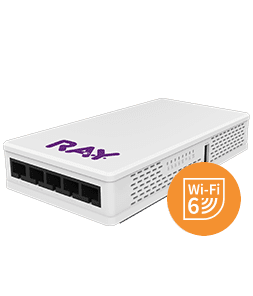

Enterprises of today, including offices, campus, hospitality, and retail rely on Wireless networks which continue to grow at a prolific rate and have become the communication medium of choice for human devices to IoT devices in enterprise environments.

Furthermore, according to Gartner, there are expected to be more than 64B IoT devices worldwide by 2025 and that 1.53 ZB of data will be transferred over-the-air as a result.

What’s their Need?

Furthermore, according to Gartner, there are expected to be more than 64B IoT devices worldwide by 2025 and that 1.53 ZB of data will be transferred over-the-air as a result.

The 6 GHz band was recently opened for Wi-Fi use in the U.S.A and a few other countries after a period of about 20 years from the last band allocation.

Furthermore, the wireless networks of the day are not static in nature. A variety of Wi-Fi and Non-Wi-Fi interferences severely impact the performance during different times of the day.

The solution is an effective Radio Resource Management (RRM) to utilize the limited radio-frequency spectrum resources and radio network infrastructure as efficiently as possible.

Difficulties to Achieve the Need

The legacy wireless network is driven through a Wi-Fi
controller deployed on site. The controller is limited on
its computational power and storage and can only
observe and control wireless in the local environment.

The legacy controllers implement static channel scan
which gives the recommendation of the current moment
but cannot adapt to the dynamic changes in the wireless
environment that the networks face.

Furthermore, there is no specific way to measure the impact of a bad wireless plan on the overall user experience. In the bid to increase coverage area, Coverage Overlap due to high Transmit power (Tx) is another challenge that causes contention and degrades the user experience.

Trusted by the world's leading companies

Company Logo
Company Logo
Company Logo
Company Logo

The Solution

  • The Ray ONE is a cloud hosted Wi-Fi controller with virtually unlimited compute power along with modern day technologies like Artificial Intelligence and Machine Learning.
  • Ray with EYE creates a network performance baseline by understanding the coverage gaps and network events that can be attributed to wireless interferences. This is continuously measured against the changes made by iRRM to ensure that the changes are having a positive impact and reinforces this learning to the Machine Learning algorithm of iRRM.
  • Ray understands the need to have a continuous view of the wireless network. To achieve this, the intelligent RRM (or iRRM for short) continuously scans the whole channel (include DFS channel) periodically without degrading user service quality.
  • iRRM plots a visual graph to help enterprise visualize its wireless network neighbourhood.

Channel Management

  • CCA Status to ensure that any Wi-Fi radio does not transmit while another is already transmitting on the same channel.
  • Channel Noise Floor & Noise Level to understand the background transmissions or retransmission (noise) by devices or objects that are creating interference on the same channel.
  • Channel Load to display the percentage of the channel usage in time (or busy time) with respect to the total channel measure- ment time (total busy and idle time).
  • Coverage to factor the received signal strength (RSSI) and signal-to-noise ratio (SNR) for all connected clients.
  • Traffic Load to determine the total bandwidth used for transmitting and receiving traffic.
  • The above combined with the inputs with EYE trigger a channel change with the expectation of positive user experience. Ray enables switch off channel-based on CSA message without degradation of user experience.
  • Each Ray scans the wireless neighbourhood in the same cluster to read the signal-to-noise (SNR) and send it to iRRM in the Ray ONE. iRRM using the aggregated data determines the transmit power adjustment on each AP to optimize the coverage cells. The Ray AP based on these instructions decreases or increases the transmit power. This is an ongoing process of optimization that continues in the background on both 2.4GHz and 5GHz radios.
  • Transmit Power Management is designed to provide power optimization of wireless networks for high density environments.

The Benefits

  • Automatic transmit power adjustment to optimize coverage cells for better coverage and roaming.
  • Implement a channel plan for the wireless network in ongoing basis to avoid RF interference and adjust to changes in the RF neighbourhood.
  • Correlate the changes implemented by iRRM with the user experience in EYE.

Other Platform Highlights

  • SOT -Security of things
  • Eye
  • Guest WIfi /Captive Portal
  • Intelligent RRm

Additional Resources

  • Blogs

Optimize wireless networks in all kinds of environments,
even high-density ones. Wonder how? Let’s talk!

Contact Sales